


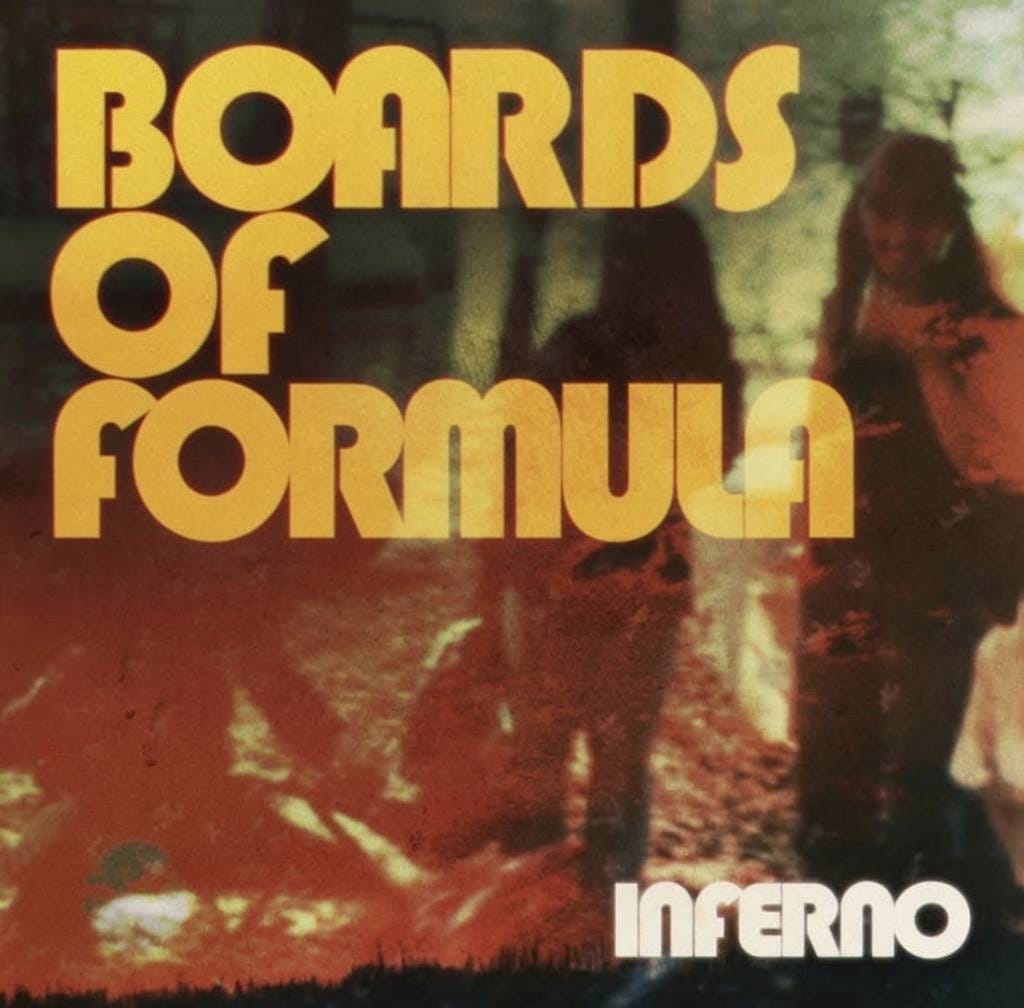
“It is not difficult to understand why journalists writing for The New York Times and The New York Review of Books were so effusive about [Stephen Jay] Gould, while scientists were so critical. Journalists have the same liberal-left beliefs as Gould. When they read him, they read what they wanted to hear, and they did not have the knowledge or integrity to question what he wrote. As for Gould himself, he must have known he was deliberately misrepresenting the evidence to suit his political agenda — and it was he who said scientists who do this deserve to spend the afterlife in the bottom circle of the Inferno.”
- Richard Lynn, Science in the Service of Ideology. (2002)1
Boards of Canada actually broke up in 2006. Right after Trans Canada Highway, both Marcus and Mike Sandison had to raise their own families in rural Scotland. The 2013 release of Tomorrow’s Harvest was already considered a comeback irony album of sorts. There were previous experimental “listening parties” in New York for Geogaddi and The Campfire Headphase, but these were mere market trials to see if anyone would buy the CDs. But it was the Tomorrow’s Harvest release campaign that was over the top. It was a concept about the end of the world, or the soundtrack to a John Carpenter film that doesn’t exist. The album was a direct parody of “April Orchestra Vol. 40.”2
That happened 13 years ago. Everyone agreed that somewhere between 2007 and 2015, Boards of Canada was officially over. I certainly did. What influence do they have now from that gap of missing time? The feeling is like a neglectful dad that comes back to see his child enter university and wants to finally reconnect. Resent, or denial from the child, is definitely in the air.
Now, here’s the real problem: What happens when you make a “new” comeback album based upon a previous comeback album and forget about what happened when guitars were introduced during The Campfire Headphase, twenty years ago!? You get a product, which was made not for a new generation of listeners, but deliberately giving in to the demands of perverted fanfiction and the stereotype of what consumers think Boards of Canada is.
To make a long story short, I am greatly disappointed with this unoriginal release called “Inferno.” Why is it such a joykill?
Every Boards of Canada album was different. I remember in 2004 buying Geogaddi on CD from Tower Records because I heard it while watching Weebl and Bob and Salad Fingers on the family computer. And when The Campfire Headphase came out, with that minimal Flash website and 30-second audio clips from Amazon.com, I thought it would be even scarier and bombastic! I remember an entire shelf of Campfire CDs at the Best Buy in Trooper, Pennsylvania. Yes, an array of CDs lined up so you would buy the new album that October on the outskirts of Pennsylvania!
But I was also disappointed with that album twenty years ago. Something has changed.
What was it? Did they get full of themselves? Was it the introduction of guitars? I just felt like something was off.
In an interview with Pitchfork,3 Mike Sandison argued,
“We knew that we had to break away from this thing. It bothered us that if you go into the big stores our stuff is always sitting in the dance music section. We never made a dance record in our entire career but our stuff still gets thrown in there. Our drive with this record [The Campfire Headphase] is to try and get us out of the dance section and into the main section with all the others bands, like ABBA and A-Ha. We’re just a band. Not an IDM band, not an electronic band, and not a dance band.”
And that was it.
They became pretentious. They were embarrassed that they were making “electronic music,” and they wanted the same respect as My Bloody Valentine or Cocteau Twins. They wanted to become the acts outside the obvious medium and subculture of electronic music. So how were they gonna ignore this reality?
A similar story arises with the French duo Daft Punk. They really only had two good albums and two bad albums. After Humans After All (also in 2005), they spent most of their time boosting their brand image and producing little to no music. Why? Because it’s all about propaganda if you can’t make a good record anymore.
Boards of Canada has unfortunately become this kind of golden-calf brand name starting around 2010. Now we have this “new” thing, 16 years later, from the same hype machine of nothing. Right smackdab on the Wikipedia page for the album, we see the word “hauntology” as a selling point. Is that really it? Are we supposed to think this is the spiritual successor to Ariel Pink’s Haunted Graffiti?
Nobody celebrated Boards of Canada because of “hauntology.” That’s the crude part. We have to remember what they were in the 90s and early 2000s. They were trip-hop and beat-driven. They were experimental and innovative. They were industrial and harsh. Those terms have been thrown out the window because it doesn’t sell to English Gen-Xers who are now acting like their Boomer parents.
Is there anything good about this album?
This “millennial macabre” fallacy of scary childhood memories has gone too far. The brothers gave in to the formula, and instead of making an original work, they just copied what people thought Boards of Canada was.
Just look at the back of the album and read the song titles if you would like to know the entire content.
The track titles are clearly derivative and read from a scripted notepad. The words are jumbled up in a medley like something later Talk Talk would produce (like “Myrrhman” or “Runeii”). The titles comes off as a plug-and-play syllabus that reads like it was created by AI. Also, the naming convention always speaks in the first, second, or third person and always follows two to six words each.
Here are some examples of this repetitiveness found on older albums that have been mutated into something else:
Aquarius is now “Age Of Capricorn.”
Kid for Today is now “Father and Son.”
In A Beautiful Place Out In The Country is now “Somewhere Right Now In The Future.”
Magic Window is now “Acts of Magic.”
In The Annexe is now “Blood In The Labyrinth.”
Sick Times is now “Deep Time.”
From One Source All Things Depend is now “All Reasons Depart.”
You Could Feel The Sky is now “You Retreat In Time And Space.”
I Saw Drones is now “I Saw Through Platonia.”
It’s a regurgitation of the small playful hints of hip-hop consciousness, painted into a concept album about an Aum Shinrikyo step-by-step cult initiation.
Even worse is that each new track sounds exactly like the last one from the previous albums.
I’ll go over each track.
Starting the album, “Introit” is the worst Boards of Canada intro (even as a generic song) I've ever heard. It’s an obvious Roland SH-101 arp sequence that mocks the computer intro start-up noise on Tomorrow’s Harvest and is far away from the stimulating “Wildlife Analysis,” “Ready Lets Go,” and “Into The Rainbow Vein,” which these three tracks sound nothing like. In addition, Introit is way too short at 35 seconds, coming close to “I Saw Drones” (from Geogaddi) at 27 seconds. Introit is just annoying and cringe, like forcefully trying to appreciate the Rankin Bass ending bumper. This one was made for the Reddit fans.
“Prophecy At 1420 MHz” was intentionally made as an epic opener. The kind of thrill of watching a brand-new movie trailer and getting excited about what’s to come. But that’s it. It could have been made by Trent Reznor for any Disney movie, and no one would blink an eye. I could see this jingle being used in a future Hyundai car commercial. But I would never play this track in a club setting. It echoes the same surf rock intention of Dayvan Cowboy, but also shames itself further that “Boards of Canada is a rock band!” Within 24 hours, YouTube comments are filled with lyric fandom of “I am god,” which makes me feel queazy about these kinds of insecure fans. I would feel much better if this song were done by the Blue Men Group.
“Hydrogen Helium Lithium Leviathan” is not “Everything You Do Is a Balloon.” The obnoxious drone chord that comes in and doesn’t stop till the 70-second mark. The backmasking feels pushed for no apparent reason (rather, it just sits there to be pretty). The digital audio workstation Reason has an instrument called the Complex-1 Modular Synthesizer, and its first preset is called “Canada” which sounds exactly like this drone. The band’s name is a product and a sound that synthesizer salesmen sell back to you. “It’s a Boards of Canada™ sound you are after!” I’m sure they got this preset and just made a song from it.


“Age Of Capricorn” goes right back into the horoscope motif that was already done. The intro harks back to “Constants are Changing” or “Macquarie Ridge” with its laidback pondering. It might as well be a clap-and-stomp version of “Olson.” The problem is that the album’s mood has changed from an upbeat action movie to a thought-provoking Adam Curtis documentary or Spike Jonze film. The chanting becomes irritating to a point where I wouldn’t be surprised to hear this in the previously mentioned Hyundai car commercial (even if it was directed by David Lynch to try to make the blandness into fine art). It’s like the brothers watched The Wicker Man and decided that was an art direction and subculture to define their music.
“Father and Son” is a new variation of “Telephasic Workshop” or “Julie and Candy.” It’s a turntablist throwback that harkens to DJ Shadow breakdancing. KMFDM’s “Death and Burial of C.R.” also comes to mind. Groovy, but it’s the same old style. I guess this song is about “the family?” (The “cult” kind or “Let me guess how bad your family is!”) It’s a good Autechre jig, but It’s also a bad sign to end Side A abruptly like this.
Turning the record over to the other side, “Somewhere Right Now In The Future” reeks of the “lost futures” nonsense. The “hypnogogic” pop of Neon Indian or Washed Out is a bad comparison. It’s just boring. This isn’t the intro to Stranger Things. If you know you could do the same thing with a guitar in your bedroom, then the track becomes disenchanted.
“Naraka” is another “Alpha and Omega” clone. I have a strong feeling they again reused their twenty-year-old gear and have the same vintage presets they made. If anything is “new,” it’s likely a cool VST3 they just purchased to test something out. I thought this was by Art of Noise, until I heard the ugly lead synth. It’s not just an ugly lead synth; “it’s a Boards of Canada™ synth!” And it’s the worst part of the track.
“Acts of Magic” is bland noise. The most boring track the band has ever released. Boards of Canada is telling me that they are “Merzbow for normies.” A girl in high school just learned about Boards of Canada and wants to sound cool next time in front of her friends and further explains that this track is really “deep and psychedelic.”
“Memory Death” is a telltale sign they are speaking to the millennials obsessed with vaporwave. “It’s about memories!” Well, this entire track is like being on the deathbed. The heart monitor doesn’t make the track any better. Its lack of creativity ends with a C-note bass guitar. I am just imagining this is the stage in the cult ritual where the member loses everything in the past and reinvents himself anew. I just had to make up a story to provide meaning to a video game soundtrack that doesn’t exist, but I am sure a Trans person will be influenced by it. (I would rather be listening to David Bowie’s Low at this point). Soundtracks today seem to be more expressive than meaningful.
“The Word Becomes Flesh” is another Telephasic Workshop. There are only two songs you can breakdance to on this album, and this is the last one. It’s not as scary as “The Devil Is in the Details.” It’s upbeat and like Kraftwerk or Daft Punk. You have to freak out your body to each word said. But the fidelity is way too clean to over the lo-fi crunch to dance (It’s the new VSTs, isn’t it?).
And right on the same release date of the album, the Backrooms movie showcases this track in the film. It makes over 80 million dollars, and the brothers do nothing to get those royalties. More exposure, more branding. This is all orchestrated on purpose.
Side B is over, and it shows you that the record ends both sides with these subliminal dance raps.
Starting the second record, “Into The Magic Land” sounds like a bad Russian cover of “Sixtyniner.” I won’t be surprised if this is the next single. It has that vibe (and smell) of a brown kid with a nose ring that plays guitars and collects designer pedals only to make “drone” and “soundscapes” out of them. It’s a self-guilt track that the band isn’t Clan of Xymox or Handful of Snowdrops. It puts the guitar forward and downplays everything else. It just doesn’t belong anywhere on the album.
There is a good reason why they didn’t move past The Campfire Headphase. It’s like how Depeche Mode made Exciter, and everyone trashed it, only then to make a good throwback like Playing the Angel, and return to Exciter with the equally bad Sounds of the Universe. This is coming back to Campfire, and sound regresses further into the Scottish rock of The Sexual Objects.
“Blood in The Labyrinth” is too polished and belongs in a shopping mall as muzak. It’s the “Dayvan Cowboy” kind of optimism for people who miss browsing Flash games on their Windows XP computer. We are back at the Campfire, or at least they are trying way too hard to be Massive Attack or The Orb.
“Deep Time” is a lazy “Sherbet Head.” Perhaps the worst Boards of Canada song ever released. Why? So many listeners called it “Tape 5” when the promo video was released to advertise the album. People cared more about Boards of Canada returning than they did about the content of what was being listened to. I want to believe that the United States government is connected with the band and knew they were going to make them successful. But the real concerning issue is that someone in the White House actually thinks this is a good song! All that over a synth pad and harp? There is nothing in the Matryoshka doll when you get to it. The elite want you to like bad music on purpose.
“All Reasons Depart” doesn’t know what it is. It’s a Roger Waters speech in the beginning, and then a funky Eurorack jam akin to “Palace Posy” later. Just end Side C already. Minimal techno like this is just filler.
For the final side, “Arena Americanada” is cheery at the wrong time. The snare is compressed, the lead is only three notes, the bass guitar budges too much in the front, and the voice stab is played out. They say you begin a record with the possibility of it being a single. Go “loud” at the start. But for what purpose now, when the album is almost over?
“The Process” must be about Process Church of the Final Judgement. The noise collage sounds way too wild, like “Gemini,” and goes into another two-in-one song structure, and the latter part morphs into “Tears From The Compound Eye.” A novelty track with two different schizophrenic emotions. Perhaps the real closer on the album.
“You Retreat In Time And Space” is bad muzak you would hear on a Kitarō meditation tape. It’s not “Open The Light.” It’s not even the intro to The Phantom Tollbooth. It doesn’t know what it is. It’s “Aquarius” without saying “orange!” The bass guitar makes it feel like it’s Acid Jazz (the Medeski Martin & Wood kind), then thinking they are going to have a special on NPR’s Tiny Desk Concerts. This is a single without saying it is.
“I Saw Through Platonia” borrowed its heartbeat from Pink Floyd’s The Dark Side of the Moon. The heartbeat, like the heart monitor on Memory Death, is too much. More new age without context. More “One Very Important Thought” without being important. All of it is a bad repeat episode. The same gimmicks from 1998 all over again. Noise at the end of the tunnel. Inferno is what The Force Awakens is to Star Wars.
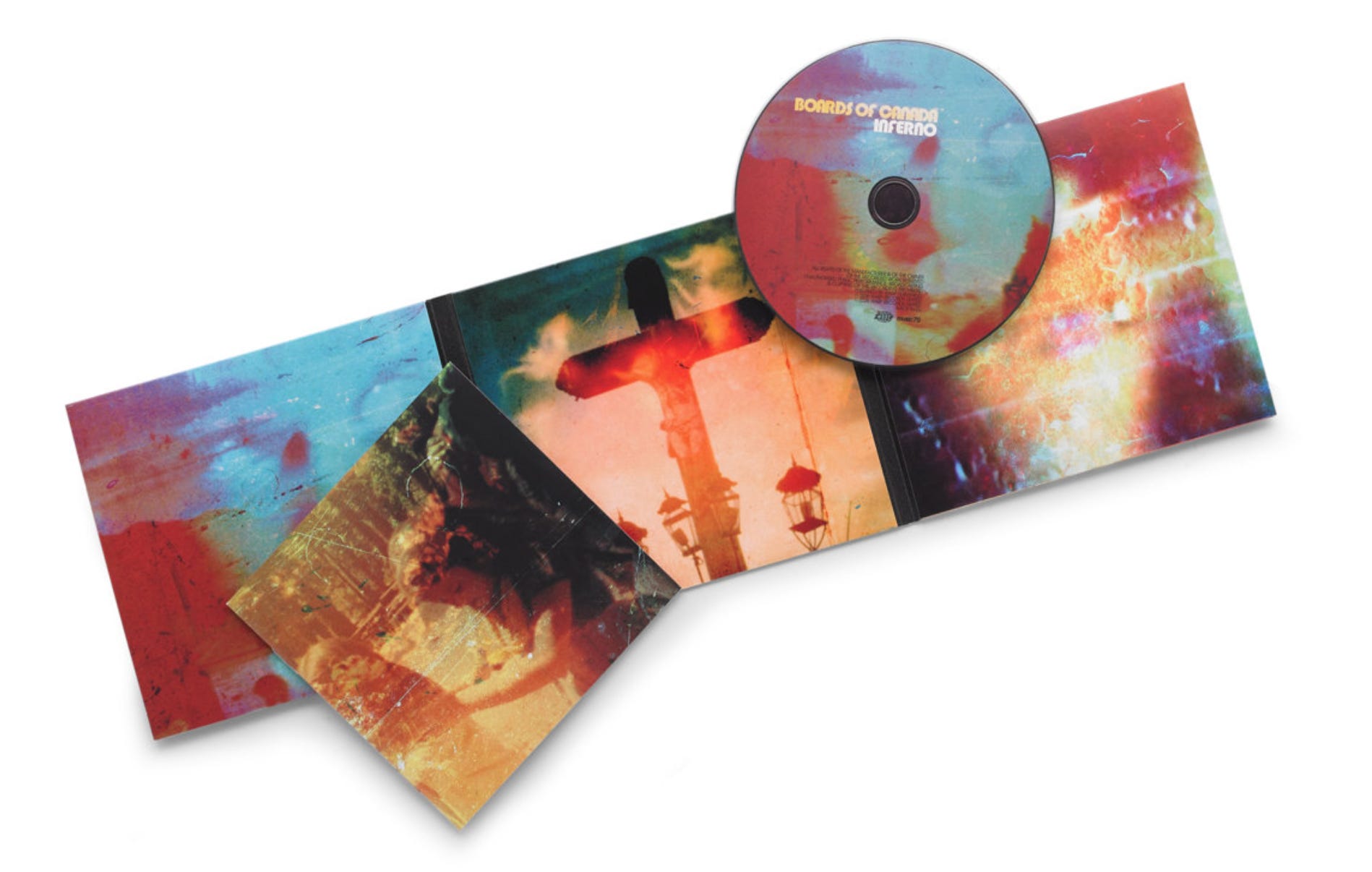
The only thing “new” about the release is the original art by the brothers featured in the album’s interior and booklet. While the art is stunning, it feels out of place with the music and the design. It’s like if they got the booklet template from Tomorrow’s Harvest and then re-uploaded new art pieces that they made to replace it. The obvious Christian cross and haunted children honestly feel boring at this point. Peter Sotos knows how to write and visualize such trauma, while the brothers feel that it is now an obligation (and for the fans) to feature such cliches in their work. This is the annoying aspect of the millennial macabre attitude. It assumes anything in the past was gloomy and scary by nostalgia, something “hidden” by euphemisms. There is no trust in the past. It’s extremely doubtful what is good and sincere in favor of the idea that all of tradition should be discarded as reactionary.
The album art suffers from the band’s name being plastered over the fresh image. It’s to make sure non-English speakers know they are buying an album by “BOARDS OF CANADA.” I can’t even see if there is actual album art other than children, which I guess is like the first album. The lowercase track listing on the back isn’t helping either.
The photography is similar to what Placebo was doing on “Without You, I’m Nothing.” So, no, the album art isn’t that innovative in the history of existing physical albums.
This product made me contemplate a greater thought. Why does everyone who signed on to Warp Records think they are indie musicians doing experiments with their guitars like they are Nick Drake? What’s with the Tycho car jingles? Why does Boards of Canada think they can cut into the Beach House consumer market? Why is the press photo another white person who does interesting things and who is just like you, living in Bushwick or West Philly? The target demographic is guys with mustaches and nose rings who buy lots of designer pedals to be “expressive,” but get really embarrassed if you call their sound “techno.”
Squarepusher’s “Detroit People Mover” is about a society without humans; a type of nonhuman future where Timothy Morton’s ideas of post-human, anti-anthropocene nihilism reign supreme. Where technology adapts to human behavior, electronic music does not exist because it’s a simple expression in a complex world. Squarepusher is a novelty jazz musician who just happens to use a drum machine, and should be judged like Miles Davis writing music for a traditional-futuristic Japan. Why? Because Americans —liberalism and capitalism— brought so much good to the Asian world, and they are just like us. (…I am being sarcastic here.)
Look at Squarepusher’s new album released this year, “Kammerkonzert.” Design-wise, it looks like an old Jazz record with the track titles on the front of the release! (I only know of the band Health who has done this, ironically mixed with power electronic aesthetics.) The record label, label address, the barcode, and even the production credits of the album are on the front! What kind of faux-authenticity is this in 2026? It is telling me nobody treats the material form with respect anymore because everything is free online. What are the chances I am going to find this album in a record bin in 2046 and buy it for $5 because of the information on the front? This assumes there are too many albums produced for the average consumer, and hence, inflation is bound to happen in the art industry.
And the distorted Neue Haas Grotesk font is not persuading me that this is a Herbie Mann or generic City pop record.
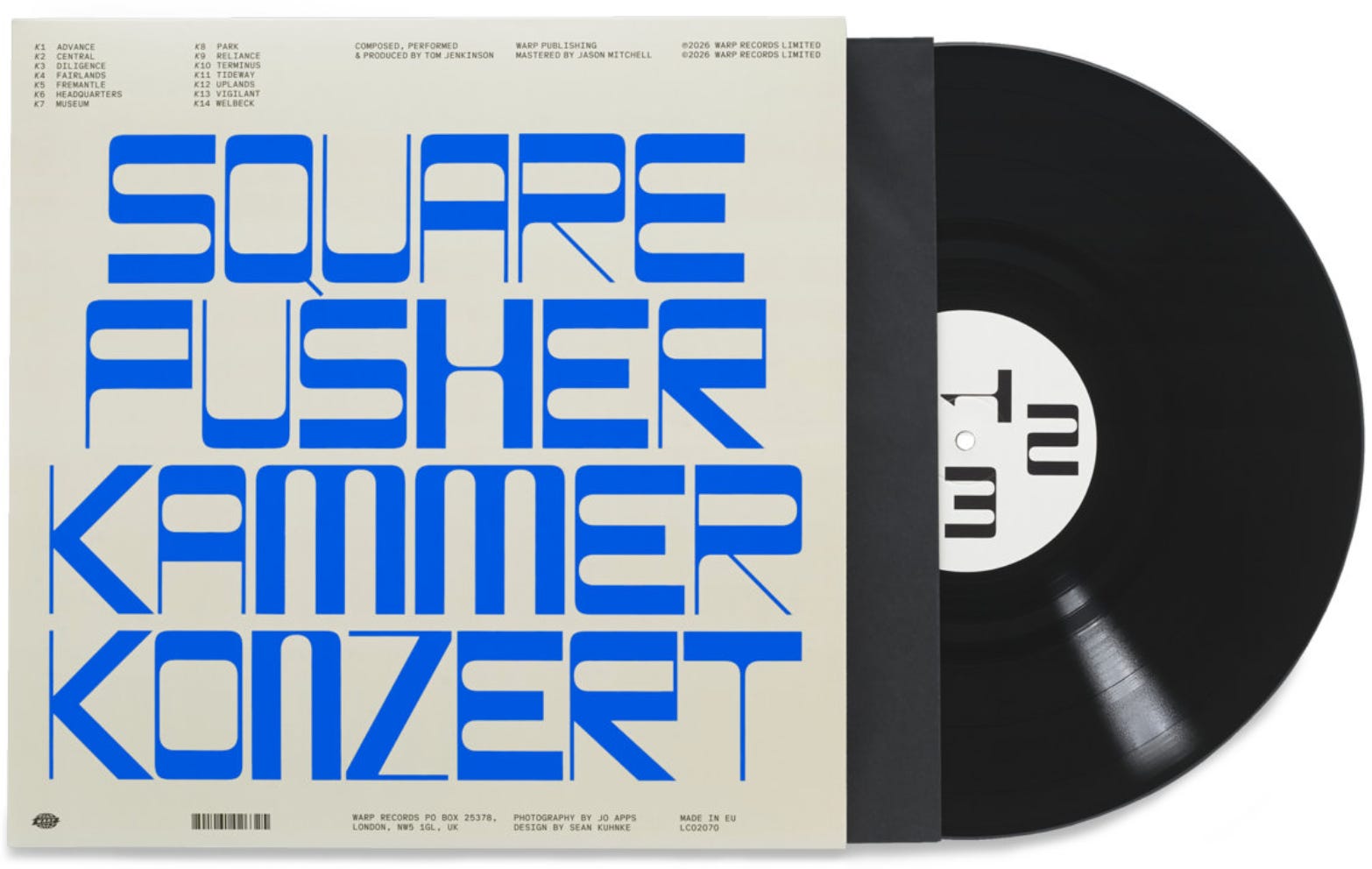
And so why am I comparing Kammerkonzert to Inferno? It’s because both are on the same label, released this year with the same target audience in mind. What does it tell you about the fans who consume these products?
Boards of Canada is trying really hard to be a joke of The Incredibles String Band or Strawberry Alarm Clock. Every album they released felt different, but not (Disco) Inferno. Craig Laubach of Acid Horizon will pick and choose his favorite things and why his favorite band could do no wrong, because it reinforces his favorite thoughts. At this point, there is nothing left, and we have to admit that Inferno isn’t their best. It’s the cost of trying to find nothing to get a book deal on Repeater.
The only thing the brothers can do to redeem themselves is to go on tour and create a new community around concert-going. The whole secret Freemason mystery is no longer trendy. Blank Banshee is still hiding behind a mask, and after a decade, it’s not making the music any better.
Aphex Twin has a synth; Richie Hawtin has a drum machine, so where is Boards of Canada’s guitar pedal?
It would also be in their best interest to release another album in three years. The stagnation harms their output. That’s why they need to market their name so much to make up for lost time. I wouldn’t be surprised if Inferno was recorded in 2015 and then released a decade later out of boredom to get another paycheck.
The golden rule is that aesthetics alone can’t define the music or sound. But here we are with another fad product to make you relive the same nostalgia of an already ironic product that was released more than a decade ago, with a zeitgeist that is getting older and bitter about society.
I predicted this outcome about nine years ago in a tweet on October 30th, 2017:
“boards of canada is extremely overrated... but geogaddi is a scary folk horror album par excellance.”

Inferno isn’t a Geogaddi. The band just gave up on originality after 2006.
That’s it. Please, don’t defend this album.
I give it 2 out of 5 stars.

-pe
6-4-2026
See for yourself: “April orchestra 40 - Le grand Vide”